There’s a moment many families quietly go through but rarely talk about out loud. It’s that stage where you start noticing small changes in a parent or loved one, but you tell yourself it’s not “serious enough” yet.
Maybe they’re forgetting appointments. Maybe the house isn’t as tidy as it used to be. Maybe they’re repeating stories or skipping meals more often than before. And then the thought comes, almost automatically, and just as quickly gets pushed away: “Let’s just manage for now. It’s not time for home care yet.”
That sentence is what comes to mind for most families. And honestly, it’s usually where things start to stretch more than people realize. Because home care is not just about crisis support. It’s about timing. And waiting too long completely changes the experience.
The delay that turns into overwhelm
Most families don’t delay care because they don’t care. It’s usually the opposite. It comes from love. Responsibility. Sometimes money concerns too. And sometimes, just not wanting to “label” anything too early.
There’s also something deeper that nobody says out loud: bringing in care can feel like admitting things are changing for good. So families adjust instead.
One person starts doing grocery runs. Another checks in every evening. Someone quietly takes over medications “just in case.” It feels small at first. Manageable, even normal. But then it spreads. Not suddenly. Just gradually.
Schedules start bending. Energy starts thinning. Everyone is “helping,” but no one is really resting. And without noticing it, the family becomes the care system. That’s usually where stress starts to show up.
Not in big dramatic ways. More like:
- missed deadlines at work (because you’re constantly checking in)
- small arguments about “who was supposed to do what.”
- guilt… a lot of guilt when someone can’t show up
- exhaustion that nobody really names out loud
And by the time home care is finally considered, it’s not just about getting support anymore. It’s about recovery from burnout that built slowly over time.
What early home care actually looks like

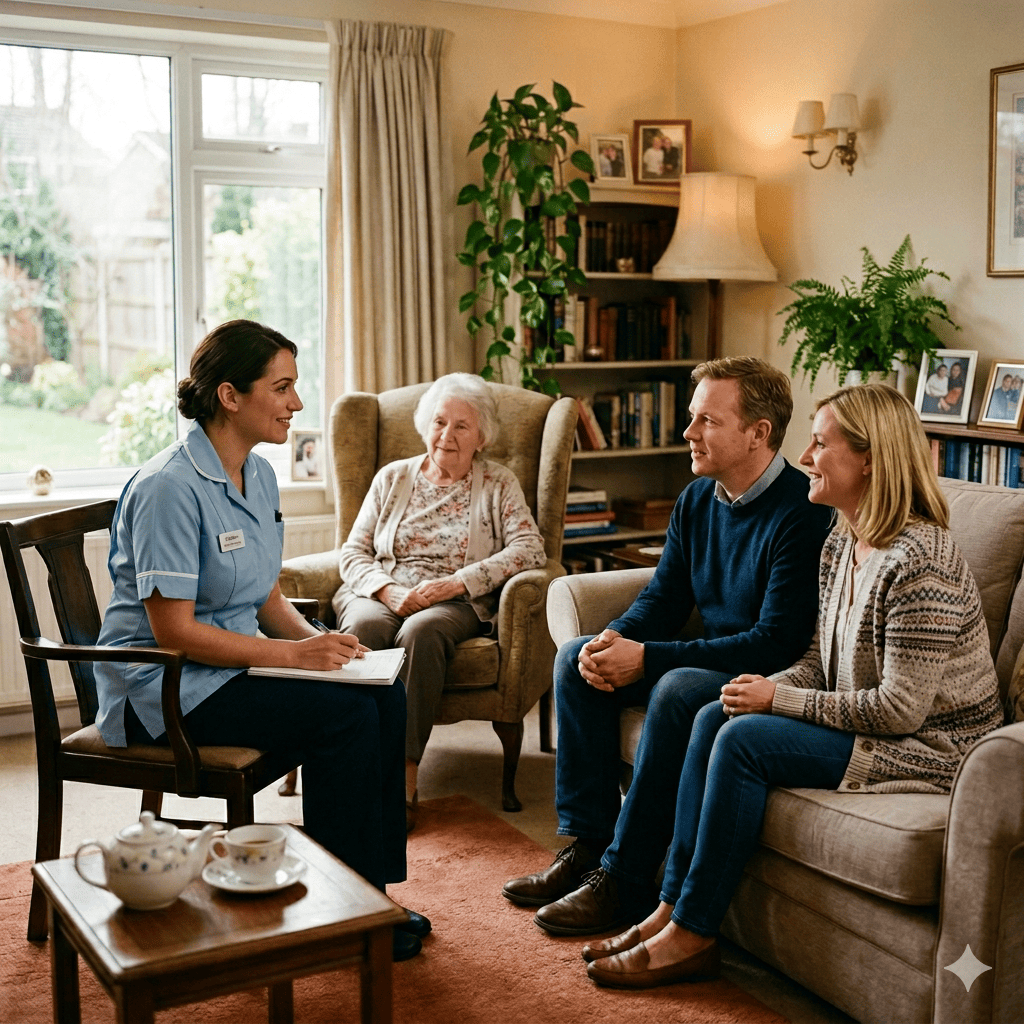
There’s a common assumption that home care only comes in when things are “really bad.” But early home care… is actually much quieter than that. It doesn’t always look like someone moving in or taking over everything. Sometimes it’s barely noticeable at first.
It can look like:
- a caregiver stopping by a few times a week
- help with bathing, meals, or getting around safely
- medication reminders (the kind that reduce family anxiety more than anything else)
- companionship: honestly, this one matters more than people expect
- light support around the house, just enough to ease pressure
And most times, it’s not about replacing the family. It’s about stabilizing what’s starting to wobble. When it’s introduced early, it doesn’t feel disruptive. It feels like… things can finally breathe again.
The person still has independence. The family isn’t constantly on edge. Life stops feeling like a series of emergencies stitched together.
The emotional cost of waiting too long
There’s a point where things shift without warning. Home care stops being “support planning” and becomes “urgent response.”
Usually after something happens:
- a fall that could’ve been worse
- missed medication for days
- confusion that leads to wandering
- a hospital visit nobody expected that soon
And after that moment, everything speeds up. Decisions have to be made quickly. There’s less time to think, less time to adjust emotionally. And that’s when care starts to feel different.
It’s no longer just support. It becomes fear-driven. Fear of another incident. Fear of leaving them alone. Fear of choosing wrong. Families then swing between extremes. Too much care too fast, or hesitation mixed with guilt no matter what they do.
It becomes heavy. Very quickly.
Earlier care creates calmer decisions

When home care comes in earlier, the tone is different. Completely different. There’s room to breathe.
Families can:
- actually understand what level of help is needed (not guessing under pressure)
- build trust slowly with caregivers
- adjust routines without panic
- involve their loved one in decisions while they still can
- just… think clearly, without urgency pressing on everything
And this is the part people don’t expect. The biggest change isn’t logistical. It’s emotional. Things stop feeling like emergency management. They start feeling like planning again. And that alone changes everything.
A moment many families recognize too late
A family says, “We’re managing fine.” And to be fair, they usually are. At first. Then months pass. Everyone is doing their best. No one is really sleeping properly, but it’s still “fine.”
And then one small thing breaks the rhythm. A stove is left on. A missed medication. A neighbour calling because something felt off. Suddenly, everything shifts.
What was once “we can handle this” becomes “we need help now. And afterwards, families often say the same thing. Almost word for word: “We should have done this earlier.” Not because they failed. But because they waited until stress decided for them.
So when is the right time?
There isn’t one perfect moment. That’s the honest answer. But some signs shouldn’t be brushed off too quickly:
- forgetfulness that starts affecting safety, not just routine
- personal care becoming harder to manage alone
- mood changes, confusion, or withdrawal that wasn’t there before
- care responsibilities quietly falling onto one or two people
- growing anxiety about leaving them alone, even briefly
And maybe the real question isn’t even “Can we still manage?” It’s more like “At what cost are we managing?” Because if managing is already affecting your health, work, relationships, sleep, or peace of mind… then support has likely already become necessary.
Just not always acknowledged yet.
Home care is not giving up

This is where families struggle the most emotionally. Bringing in care can feel like stepping back. Like letting go. But in reality, it often does the opposite. It allows families to show up differently.
Not as exhausted coordinators trying to hold everything together… but as present sons, daughters, spouses again. You get to sit and talk instead of rushing through tasks. You visit without pressure hanging over your head. You focus on connection again not coordination.
And honestly, many families don’t realize how much they’ve been missing that part until they get it back.
Final thought
Most families don’t wait too long because they don’t care. They wait because they hope things will stay stable. Because they want normal life to continue just a little longer. That’s very human. But support isn’t only for the moment things break.
It’s also for the moment things start shifting quietly, slowly, before everything becomes heavy. Because home care works best when it isn’t forced by crisis. It works best when it’s allowed to arrive early enough to actually make life easier for everyone involved.